Carbon Streams

What counts as an airport carbon resource?

Carbon Recycling Technologies maps carbon-bearing resources across terminal airflow, HVAC, central plants, organics, used cooking oil, grease, waste, packaging, liquids, solids, methane, wastewater, concessions, tenants, airlines, and regional infrastructure so each stream can be classified by ownership, Scope relevance, capture potential, utilization route, removal potential, MRV burden, and buyer value.

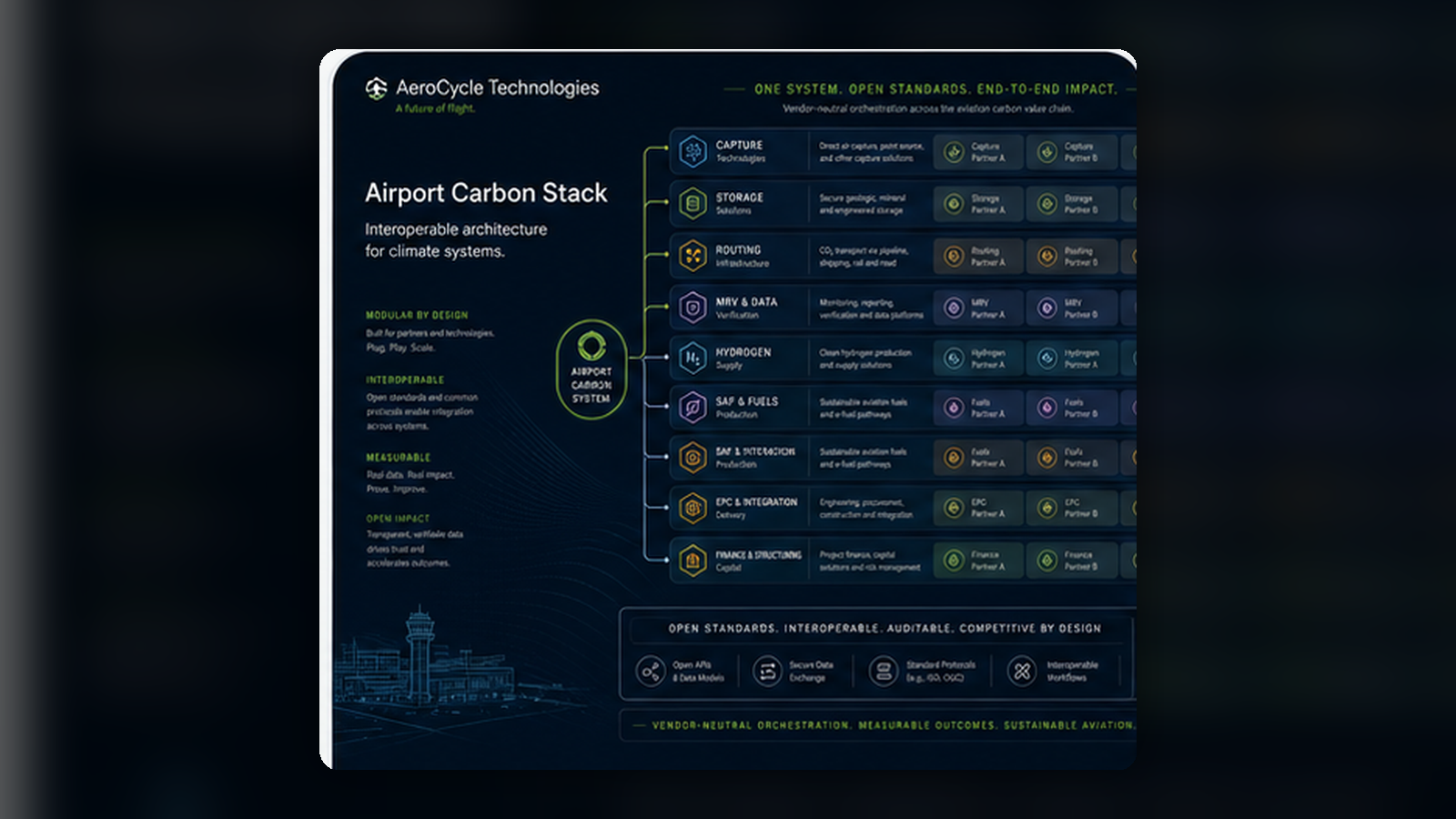
Airport carbon resource stack visualization
Stream classification before pathway selection
Core definition

Carbon Recycling Technologies treats the airport as a carbon recycling system, more than an emissions source.

The assessment starts by distinguishing carbon form from carbon origin. A boiler exhaust stream, food waste stream, used cooking oil contract, mixed trash stream, landfill gas source, and regional wastewater asset may all contain carbon, but they do not create the same pathway or claim.

Stream inventory

The seven stream groups Carbon Recycling Technologies maps.

01

Atmospheric CO₂

Terminal air, HVAC return air, outdoor air intakes, enclosed spaces, parking structures, baggage buildings, and high-traffic zones. Best suited for DAC/HVAC capture, e-fuel screening, and public education where economics and energy use are credible.

02

Fossil or Mixed CO₂

Boilers, CHP, central plants, backup generators, ground equipment, WtE plants, or nearby industrial systems. Best suited for point-source capture, utilization, storage, e-fuel analysis, and emissions-reduction claims.

03

Biogenic Solids and Liquids

Food waste, landscaping waste, biosolids, paper, cardboard, wood, used cooking oil, fats, oils, and greases. Best suited for HEFA feedstock, AD/RNG, compost, biochar, hydrochar, or diversion pathways.

04

Fossil Solids and Liquids

Plastics, synthetic materials, conventional fuel residues, oils, lubricants, and certain packaging streams. Best suited for recycling, chemical recycling, pyrolysis, gasification, controlled disposal, or careful waste-to-fuels screening.

05

Mixed Municipal Waste

Airport trash, airline cabin waste, tenant waste, packaging, food residuals, plastics, fibers, and contaminated recyclables. Best suited for sorting, diversion, MSW-to-SAF screening, waste-to-energy linkage, or landfill-reduction strategies.

06

Methane and Biogas

Landfill gas, anaerobic digestion gas, wastewater treatment gas, and organic-waste methane risk. Best suited for methane mitigation, RNG, power, CO₂ capture from biogas upgrading, or regional carbon-corridor planning.

07

Regional Carbon Infrastructure

Landfills, transfer stations, wastewater plants, WtE facilities, food distributors, hotels, universities, hospitals, logistics parks, and nearby industrial emitters. Best suited for regional SAF corridors, carbon hubs, offtake aggregation, and infrastructure capital planning.
Classification logic

The routing decision depends on five questions.

Phase 0 converts disconnected sustainability data into a practical routing decision for each stream.

Form

What is it?

Gas, liquid, solid, sludge, methane-rich, dissolved, concentrated, dilute, clean, mixed, or contaminated.

Origin

Where did the carbon come from?

Atmospheric, fossil, biogenic, waste-derived, recycled, regional, tenant-generated, or mixed.

Control

Who controls it?

Airport authority, city, airline, concessionaire, hauler, utility, fuel farm, tenant, wastewater operator, or third-party vendor.

Pathway

Where can it go?

SAF, e-fuel, HEFA feedstock, RNG, biochar, compost, recycling, mineralization, storage, utilization, or verified diversion.

Claim

What can be said?

Reduction, recycling, displacement, utilization, diversion, methane mitigation, storage, durable removal, or no public claim.

Example routing map

One airport can contain multiple carbon pathways at once.

Airport-associated sourceCarbon typePotential route
Terminal/HVAC airAtmospheric CO₂ gasDAC/HVAC capture, e-SAF screening, public education
Natural gas boiler/CHPFossil CO₂ gasPoint-source capture, utilization, storage, e-fuel analysis
Used cooking oil and greaseLiquid biogenic carbonHEFA SAF or renewable diesel feedstock aggregation
Food waste and organicsWet biogenic carbonAD/RNG, compost, biochar, hydrochar, biogas CO₂ capture
Mixed airport wasteMixed fossil + biogenic carbonSorting, recycling, gasification, waste-to-fuels, verified diversion
Landfill gas / wastewater biogasMethane + CO₂RNG, power, methane mitigation, CO₂ capture
Regional MSW / WtE / industrial CO₂Mixed or fossil/biogenic depending sourceRegional carbon-to-fuels corridor, storage, utilization, infrastructure capital
Begin with classification

Before choosing technology, identify what kind of carbon the airport actually has.

The Phase 0 assessment turns carbon streams into a ranked, rights-aware, claims-safe resource map.