Atlanta / Mega-Hub Carbon Resource Node
A hub-scale model focused on central thermal systems, terminal airflow, airline partner interfaces, food and concession streams, mixed waste, regional MSW, SAF relevance, and multi-stakeholder governance.
Carbon Recycling Technologies supports one airport, an airline hub, an airport authority, a multi-airport operator, or a regional aviation carbon network without being tied to one airline, one waste stream, one vendor, or one location.
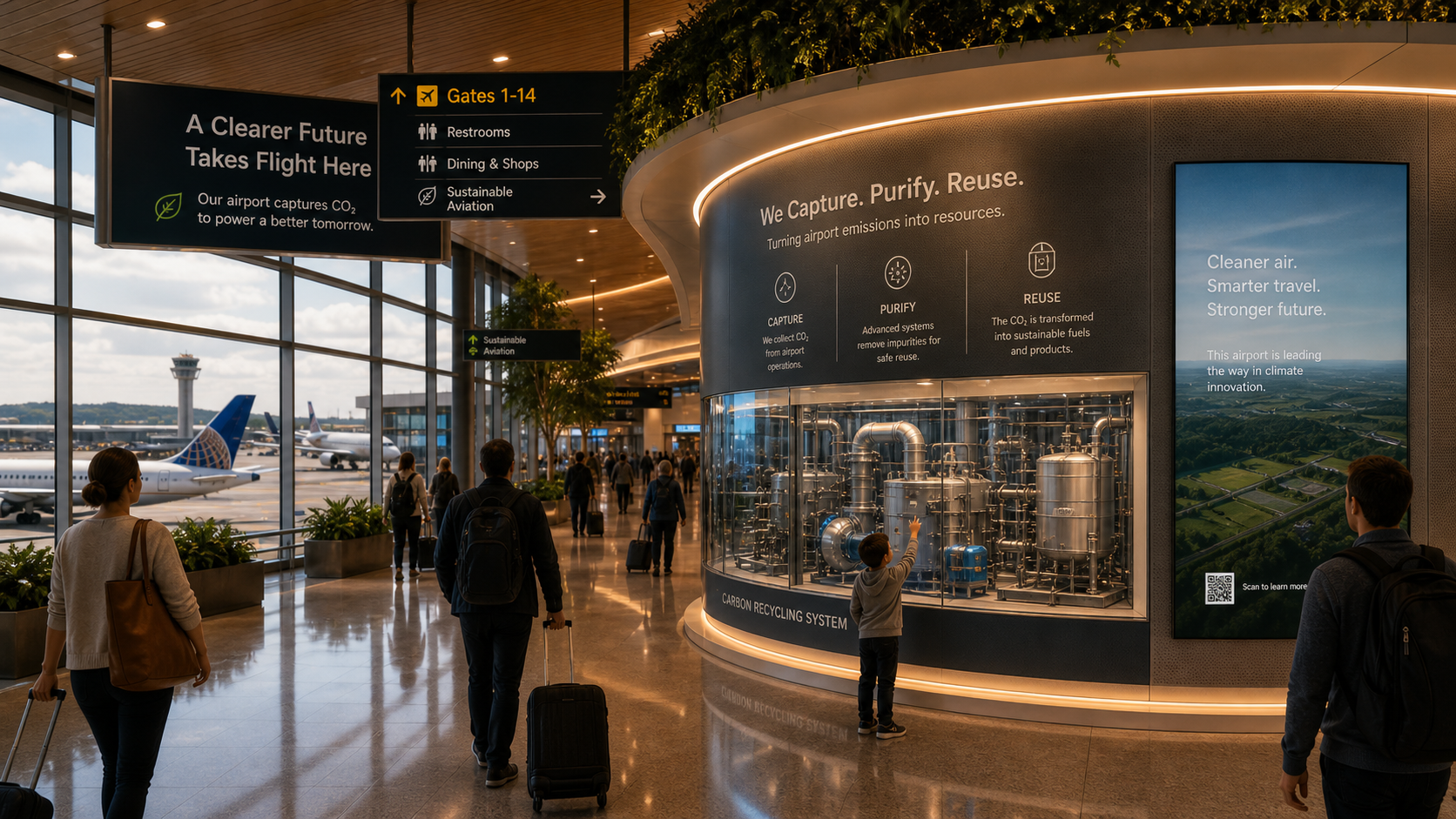
These models show how the Carbon Recycling Technologies category can be applied. They are not statements that any named airport has engaged Carbon Recycling Technologies.
A hub-scale model focused on central thermal systems, terminal airflow, airline partner interfaces, food and concession streams, mixed waste, regional MSW, SAF relevance, and multi-stakeholder governance.
A model focused on HVAC energy load, solar and clean power integration, water-aware deployment, food-waste composting, tenant participation, waste measurement, and regional desert infrastructure.
A model focused on central utility assets, airline operations, cargo logistics, regional energy transition, clean power, fuel infrastructure, and multi-jurisdiction coordination.
A model aligned around SAF mandates, airport clean-energy transition, waste and resource circularity, carbon accounting discipline, public procurement, and multi-airport operators.
A model where an airline co-sponsors Phase 0 around lounges, terminals, hub decarbonization, used cooking oil, food waste, tenant programs, SAF strategy, and Scope 3 partnership.
A model where an airport anchors nearby universities, hospitals, hotels, logistics zones, landfills, wastewater plants, WtE, industrial assets, hydrogen, and SAF/e-fuel producers.
The representative model becomes actionable only after the airport’s streams, rights, data, vendors, and claims are mapped.