Product and packaging labels
Food containers, cups, bags, wrappers, paperboard, and other airport-sold items can receive standardized color, icon, text, and QR identifiers.
SmartSort connects products, packaging, bins, signs, tenant workflows, concession activity, custodial handling, used cooking oil and grease pathways, waste partners, and MRV so carbon-bearing materials can move toward the right downstream route inside airports and other controlled facilities.
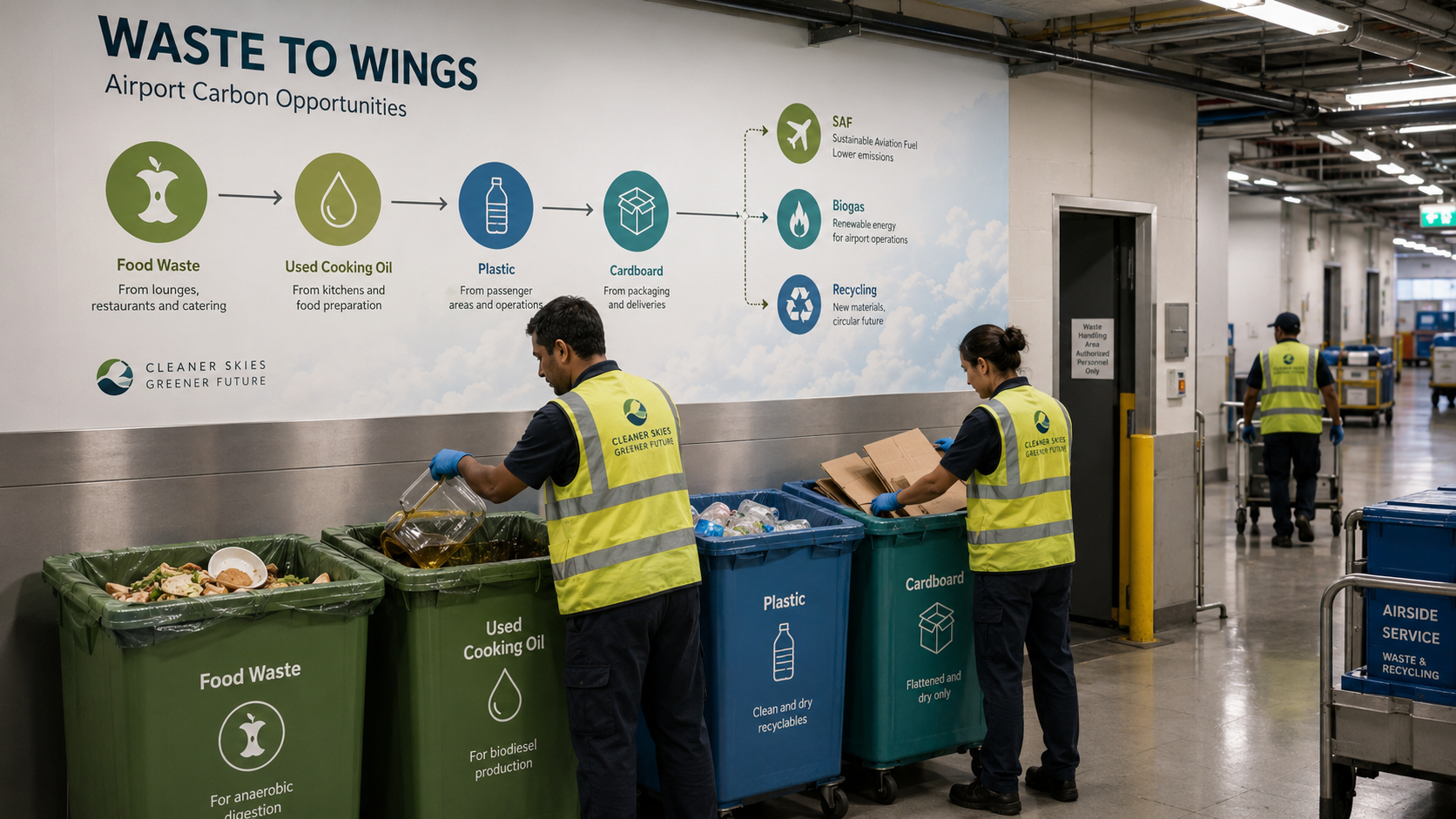
That makes airports unusually strong for a coordinated sorting system. Concession packaging, bin placement, signage, custodial routing, waste-hauler data, tenant requirements, and passenger education can be aligned around a single carbon recycling routing logic.
SmartSort works because airports can coordinate the products sold, the labels placed on those products, the bins passengers see, the back-of-house handling process, and the downstream reporting logic.
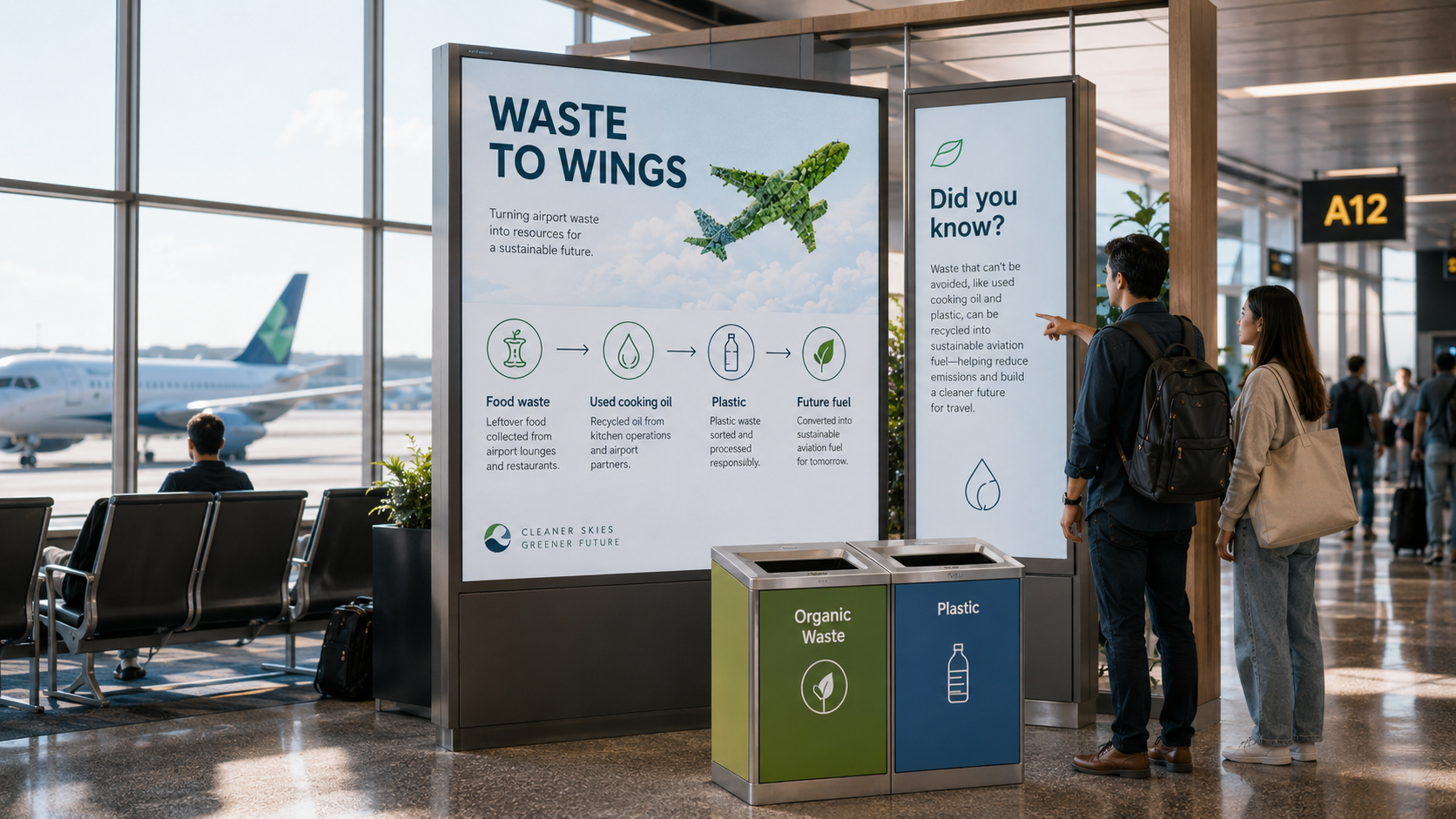
Food containers, cups, bags, wrappers, paperboard, and other airport-sold items can receive standardized color, icon, text, and QR identifiers.
Passenger-facing bins, tenant areas, kitchen stations, and service corridors use the same route logic so materials stay separated.
Custodial teams, concessionaires, clubs, caterers, and haulers route materials to composting, recycling, AD/RNG, HEFA feedstock, biochar, or approved disposal.
Weights, contamination, scans, collection logs, hauler data, and processing outcomes support reporting without overstating SAF or removal claims.
Waste to Wings is the passenger-facing education system of SmartSort. It explains that airport waste can support multiple pathways, including future fuel, composting, recycling, RNG, circular materials, verified diversion, and responsible disposal.
Accessible and operationally precise sorting combines color with icons, text, material category, downstream route, tenant rules, hauler reporting, and QR-enabled traceability where useful.
Carbon Recycling Technologies can assess packaging, concessions, bin placement, passenger signage, custodial workflows, waste-hauler data, tenant participation, regulated waste boundaries, and MRV before recommending a pilot.