Phase 0 Carbon Flow Control Map

A funded first step for airport circular CO₂ supply chains.

Phase 0 maps the full airport carbon-resource picture: terminal airflow, HVAC, central plants, concessions, used cooking oil, grease, food waste, wastewater, packaging, tenants, airlines, Scope 1/2/3 relevance, Airport Carbon Accreditation priorities, university and lab routes, vendor categories, funding logic, MRV requirements, and first implementation pathway.

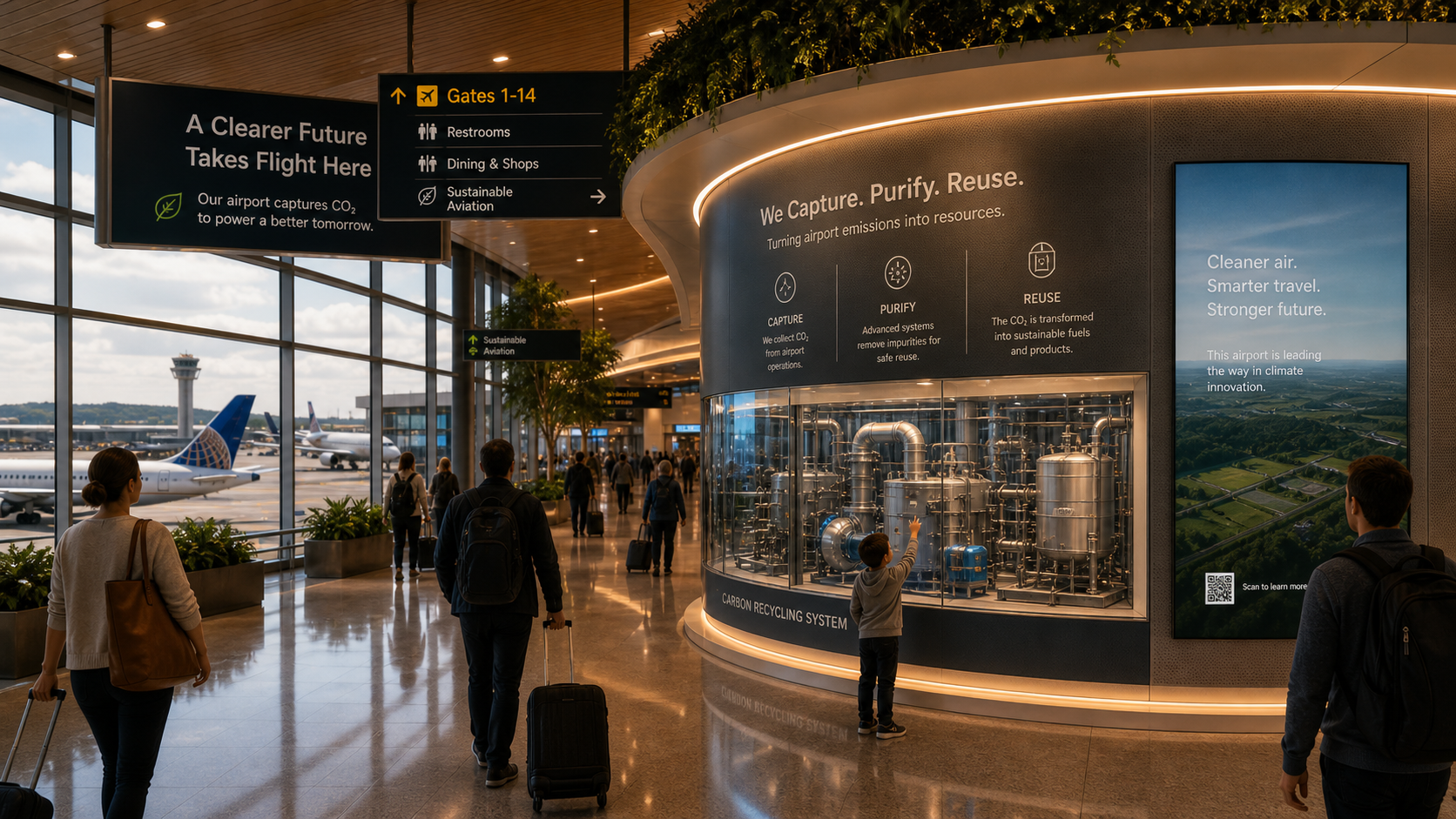
Airport carbon resource infrastructure visualization
Managed airport carbon recycling infrastructure
What Phase 0 delivers

The decision-ready map for forming, funding, and operating the carbon recycling system.

Phase 0 creates a practical view of what carbon-bearing streams exist, what is happening to them today, who controls them, which stakeholders benefit, which technologies are realistic, which claims require evidence, and which operating model can move the site toward implementation.

Core deliverables

What the buyer and first movers receive.

The map is designed for decision-makers, operators, sponsors, universities, vendors, and implementation partners.

01

Carbon Resource Map

A source-by-source inventory of terminal airflow, HVAC, central plants, boilers, CHP, generators, food waste, used cooking oil, grease, concession streams, airline and tenant activity, cargo/logistics assets, wastewater, biosolids, hotels, regional landfills, WtE, and nearby industrial sources.

02

Carbon Classification

Each stream is classified by form and origin: atmospheric, fossil, biogenic, waste-derived, mixed, CO₂, methane, liquid, solid, sludge, regulated, or contract-controlled.

03

Current-State Handling Map

A clear view of what is happening now: exhausted, landfilled, composted, recycled, hauled, treated, captured, reused, converted, credited, or unmanaged.

04

Pathway Readiness Ranking

Each stream is ranked by technical, economic, operational, regulatory, collection, safety, tenant, rights, and claims readiness so the first pilot is selected rationally.

05

Utility / Air / Energy Review

A focused assessment of terminal air, HVAC, central plant, boiler, CHP, generator, clean power, hydrogen, and e-fuel-relevant infrastructure.

06

Waste / Organics / Tenant Review

A focused review of concessionaires, coffee retail, QSRs, restaurants, lounges, catering, food waste, used cooking oil, fats/greases, packaging, mixed waste, recycling, composting, regulated deplaned waste, hotels, and hauler contracts.

07

Vendor Category Shortlist

A vendor-neutral map of capture, sorting, hauling, preprocessing, AD, gasification, HEFA, SAF/e-fuel, storage, MRV, EPC, utilization, and finance partners that may fit each stream.

08

Routing and Claims Framework

A practical map of destinations and claims: SAF, e-fuels, renewable diesel, RNG, biochar, compost, mineralization, storage, industrial reuse, purchased CO₂ displacement, carbon markets, or verified diversion.

09

Pilot and Corridor Roadmap

A board/executive-ready roadmap for the lowest-risk pilot, regional carbon-to-fuels corridor potential, stakeholder roles, data needs, and next-phase operating model.

10

Operating Model for Ongoing Management

A practical service model for moving from assessment to implementation, including vendor coordination, tenant participation, data collection, MRV, claims, reporting, and scale-up support.
Cost-share and stakeholder support

The Phase 0 can be funded by the actors who gain the most value from the map.

The site owner receives the implementation roadmap. The anchor airline or customer receives hub or demand relevance. Public agencies receive economic-development and climate value. Universities receive commercialization pathways. Vendors and capital partners receive clearer deployment opportunities.

Site owner

Authorization and largest value

Funds the core assessment because it controls the airport or facility environment, tenant participation, capital planning, public reporting, and implementation path.

Anchor demand

Airline, customer, or tenant sponsor

Co-sponsors the work when SAF, Scope 3, public visibility, product routing, or customer-facing value matters.

Commercialization

University and lab participation

Supports the translation of research, IP, faculty expertise, students, and pilots into the site-specific map.

Public value

Regional or economic-development partner

Supports jobs, grants, workforce, climate infrastructure, and regional innovation outcomes.

Implementation supply

Vendors and operators

Provide capability profiles, technology inputs, data needs, and deployment constraints for accurate pathway scoring.

Capital and offtake

Financeable next steps

Evaluate infrastructure revenue, carbon products, offtake, credits, tax-credit relevance, and investment readiness after the map is complete.

Typical timeline

60 to 120 days depending on airport size, tenant complexity, and data access.

Phase 0 can be scoped for a single terminal, a central plant, an airline hub, a whole airport, a waste stream, or a regional carbon recycling corridor.

Weeks 1–2Stakeholder kickoff, data request, source boundary definition, tenant and contract map.
Weeks 3–6Infrastructure, waste, airflow, plant, organics, and regional source review.
Weeks 7–10Classification, scoring, vendor category matching, routing options, finance and offtake review.
Weeks 11–16Pilot recommendation, claims framework, executive briefing, next-phase implementation model.

Recommended participants

  • Airport sustainability leadership
  • Facilities and engineering
  • Waste, recycling, and janitorial leads
  • Finance and capital planning
  • Legal, procurement, risk, and concessions teams
  • Airline hub partner where relevant
  • Central plant or utility operator
  • Tenant/concessionaire representative
  • Waste hauler, composting, or recycling partner
  • SAF, storage, RNG, utilization, or e-fuel partner where relevant

Data typically requested

  • Utility bills, fuel-use records, and GHG inventory
  • Boiler, CHP, central plant, HVAC, and terminal square-footage data
  • Waste hauling, landfill, recycling, composting, and diversion records
  • Used cooking oil, grease trap, concession, catering, and food-waste contracts
  • Passenger volume, occupancy patterns, and tenant boundaries
  • Wastewater, biosolids, landscaping, and regulated-waste handling data where available
  • Planned capital projects, vendor contracts, and lease sustainability clauses
  • Regional landfill, WtE, wastewater, industrial CO₂, clean-power, hydrogen, and SAF infrastructure context
CDR screen

Phase 0 now includes an airport-anchored carbon removal screen.

The assessment separates emissions reduction, SAF relevance, utilization, diversion, and durable removal. It identifies which streams could support CDR only where the processing route, storage pathway, permanence, MRV, and claims boundary can be credibly evaluated.

Source

Find airport-linked biogenic carbon

Food waste, wastewater solids, concessions organics, airline catering waste, grease, used cooking oil, digestate, and nearby regional organic streams.

Route

Screen CDR-ready pathways

AD, SOFC, biogenic CO₂ capture, digestate stabilization, biochar, hydrochar, mineralization, geologic storage, or other durable sinks where appropriate.

Claim

Keep removal claims disciplined

Only call it CDR where durable storage and evidence exist. Other valuable outcomes remain reduction, recycling, utilization, fuel, diversion, or Scope benefits.

Expanded modules

Phase 0 connects system design, first-mover alignment, SmartSort readiness, and university/lab commercialization.

The assessment determines how the site can operate the program, separate materials correctly, activate vendors, involve tenants, bring universities and labs into commercialization routes, and move from map to implementation.

First Movers

Stakeholder formation and cost-share

Define the site owner, anchor airline or customer, university/lab role, public partner, tenants, vendors, capital, offtake, and funding structure.

SmartSort Readiness

Source separation and public participation

Evaluate packaging, product labels, bins, signage, QR logic, tenant workflows, waste-hauler data, contamination risk, and regulated material boundaries.

Translation Architect

University, lab, and vendor routes

Identify relevant IP, research groups, startups, vendors, sponsored research opportunities, student projects, and commercialization routes that fit the site.

Begin with Phase 0

Request a Phase 0 Carbon Flow Control Map before selecting technology, vendors, or partners.

Carbon Recycling Technologies can structure Phase 0 for a single airport, airline hub, campus, facility portfolio, regional infrastructure network, or high-value airport, campus, or facility site.