SAF demand is rising
Airlines and policy frameworks are pushing lower-carbon aviation fuel, but carbon sourcing and infrastructure coordination remain fragmented.
Aviation decarbonization, SAF demand, airport energy transition, fragmented vendors, carbon accreditation, and corporate climate reporting are converging into a new infrastructure category.
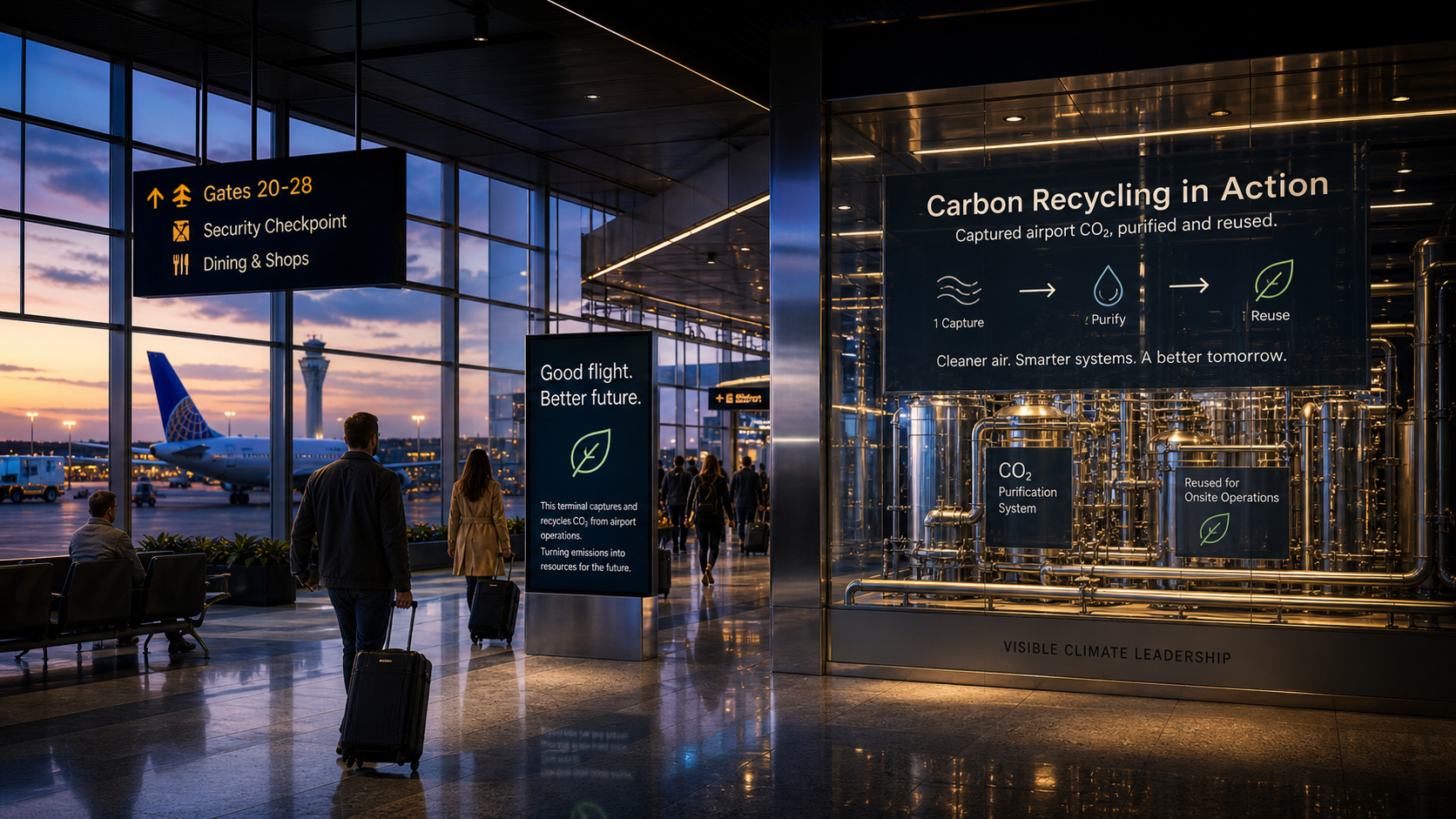
Airlines and policy frameworks are pushing lower-carbon aviation fuel, but carbon sourcing and infrastructure coordination remain fragmented.
Airport authorities are increasingly managing electricity, fuel, resilience, clean energy, tenants, fleets, and regional infrastructure.
Terminal airflow, central plants, boilers, CHP, food waste, used cooking oil, mixed waste, tenant assets, wastewater, and nearby regional sources are rarely treated as strategic carbon recycling assets.
Capture, HVAC, storage, MRV, hydrogen, SAF, EPC, finance, and offtake providers need a common airport operating framework.
Stakeholders need disciplined boundaries around reductions, recycling, utilization, storage, removals, Scope claims, and double counting.
The airports and partners that organize carbon resources early can shape the practical playbook for aviation carbon recycling infrastructure without competing with existing carbon accreditation programs.
Carbon Recycling Technologies aligns Phase 0 discussions with public aviation decarbonization goals, SAF scale-up initiatives, airport clean energy strategies, Airport Carbon Accreditation, and carbon accounting frameworks while keeping the focus on assessment, partner coordination, and infrastructure readiness.
Carbon Recycling Technologies structures Phase 0 for a single airport, airline hub, airport authority, multi-airport operator, or regional aviation infrastructure network. No hardware commitment is required to begin.